Showing posts with label history. Show all posts

15 March 2013

"In states unborn and accents yet unknown": Caesar's legacy

It's been 2057 years since Brutus, Cassius, and between six and sixty other conspirators stabbed Gaius Julius Caesar to death in the Senate's makeshift meeting-place, a theatre built by Caesar's friend, ally, and eventual nemesis, Gnaeus Pompeius Magnus. Over two millennia later, the words "Beware the Ides of March" are all over the Internet today. Would it please Caesar to know that his death is still remembered? If he could look back, might he be glad that he was struck down at the height and thus immortalized in story, rather than living on to a natural death, which might have relegated him to a lesser place in history?

Flowers left at Caesar's grave, 2011;
credit An American in Rome.
I've talked before about how the Ides of March retains a strange place in our cultural awareness. As Dr. Ralph Alan Cohen pointed out in a recent lecture, the fact that Julius Caesar was assassinated by his friend Brutus on the Ides of March may be the one historical fact that nearly everyone in the Western world knows. Somehow it permeates, reinforced by all sorts of media -- books, TV, movies, song, and theatre. As an example of just how strongly this awareness still resonates, I discovered not too long ago that people still leave flowers at the (supposed) site of Caesar's grave (or, rather, at the site of his cremation, since most Romans did not inter the bones of the dead as Shakespeare implies). The picture at right shows one example, and Googling "flowers left at Caesar's grave" yields many more. They change over time -- someone takes the old away, making room for the new, and in all of those pictures, the flowers always look fresh and colorful. I would love to take a closer look at some of those notes that get left for him, to know where these people come from, what they have to say to this famous corpse, what drives them to remember his death so many years later.

Considering the longevity of the tale of Caesar's epic life and death, Shakespeare puts premonitory words in Cassius's and Brutus's mouths, just moments after the conspirators perform their savage butchery/noble sacrifice.

CASSIUS
Stoop, then, and wash. How many ages hence
Shall this our lofty scene be acted over
In states unborn and accents yet unknown?
BRUTUS
How many times shall Caesar bleed in sport,
That now on Pompey's basis lies along
No worthier than the dust?
CASSIUS
So oft as that shall be,
So often shall the knot of us be call'd
The men that gave their country liberty.
For Shakespeare, this was obviously a tongue-in-cheek joke, since his company was acting it over in England, which from Brutus's perspective wouldn't be a unified country for nearly a thousand years, in the English language, which, though heavily influenced by Latin, was still centuries and several Germanic, Dutch, Scandinavian, and French invasions away from developing into something Shakespeare would even begin to recognize. For the ASC this season, in yet another nation that didn't exist either in Shakespeare's time or in Caesar's, in a variety of American accents (with one Australian in the mix), the lines have an extra layer of sly knowing painted on them. We're contributing to the tradition, and at this rate, it seems unlikely that human civilization will ever forget Julius Caesar -- or how he died.

If you want commemorate Caesar's death by learning more about his life, you could do worse than starting with Shakespeare's version of the story. Despite dramatic license and some imaginative emotional scenes, he adheres pretty closely to his sources, primarily Plutarch's Life of Caesar and Life of Brutus. You could also look to Velleius Paterculus, Nicolaus of Damascus, or Appian. If you're more a secondary source sort of researcher, I can also recommend the podcast series The History of Rome. Episodes 39-44 chronicle Caesar's life, but if you're any sort of classicist, the entire series is well worth a listen. If you prefer the sensationalist take, HBO's Rome is fantastic entertainment and extraordinarily well-acted. HBO compresses time, conflates characters, takes its own liberties, and gives you a different angle on events than Shakespeare does, but on the whole, it's actually not that far off from reality, either. The showrunners said they strove for authenticity rather than accuracy, and the result is an exciting political drama that just happens to be set more than two thousand years ago. If you're looking for a good long read, Colleen McCullough's Masters of Rome series covers the collapse of the Roman Republic beginning with Gaius Marius, whose martial reforms and political machinations in many ways set the stage for Caesar to be able to achieve what he did a few decades later, and ending with Antony and Cleopatra. Western culture has never been short on either nonfiction or fiction about Caesar and the Roman world -- and if you have any good recommendations for me, I'd love to hear them.

12 February 2013

"You know it is the feast of Lupercal": February Traditions Then and Now

Shakespeare's Julius Caesar opens on a holiday -- but a holiday no one in Shakespeare's England any longer celebrated. Unlike Twelfth Night, Shrove Tuesday, Whitsuntide, or any other liturgical holiday of the Christian calendar, the Lupercalia was something no one in Shakespeare's audiences would have had personal experience with, and we are even further removed from it today. But what correlations does it have to Tudor-era traditions and to our modern late-winter festivities? More than you might immediately guess.

Abbi Hawk, Gregory Jon Phelps, and Benjamin Curns
in Julius Caesar, 2013. Photo by Pat Jarrett.
So what is this strange Roman festival? Plutarch discusses the Lupercalia, held February 13th-15th, in his "Life of Romulus," the first of his Twelve Lives. He describes it there as the Romans celebrated it early in the Republic, as a feast of purification, but also as a memorial to the she-wolf that suckled Romulus and Remus after their exposure in the wilderness. He gives the following description of the ceremonies:
... the priests slaughter goats, and then, after two youths of noble birth have been brought to them, some of them touch their foreheads with a bloody knife, and others wipe the stain off at once with wool dipped in milk. The youths must laugh after their foreheads are wiped. After this they cut the goats' skins into strips and run about, with nothing on but a girdle, striking all who meet them with the thongs, and young married women do not try to avoid their blows, fancying that they promote conception and easy child-birth. ...

A certain Butas, who wrote fabulous explanations of Roman customs in elegiac verse, says that Romulus and Remus, after their victory over Amulius, ran exultantly to the spot where, when they were babes, the she-wolf gave them suck, and that the festival is conducted in imitation of this action, and that the two youths of noble birth run "Smiting all those whom they meet, as once with brandished weapons, Down from Alba's heights, Remus and Romulus ran." And that the bloody sword is applied to their foreheads as a symbol of the peril and slaughter of that day, while the cleansing of their foreheads with milk is in remembrance of the nourishment which the babes received. But Caius Acilius writes that before the founding of the city Romulus and his brother once lost their flocks, and after praying to Faunus, ran forth in quest of them naked, that they might not be impeded by sweat; and that this is the reason why the Luperci run about naked. 
The Lupercalia had, by Caesar's time, also grown to incorporate an earlier festival called the Februalia, which was more strictly a purification ritual having to do, it seems, with spring cleaning and washing. The name of the month February (Februarius to the Romans) derives from this holiday. Perhaps in recognition of the connection, the strips of goat flesh used during the Lupercal were called februa. The Lupercalia was so popular that it hung on as a tradition in Rome long after the advent of Christianity. In 494 CE, the Pope finally took measures to halt the pagan practice (telling the wealthy men of Rome that they should go run naked in the streets themselves if they liked the holiday so much), transforming the Lupercalia into the Feast of the Purification of the Virgin Mary -- better known as Candlemas.

Shakespeare gives a fairly faithful rendition of the Lupercalia in Julius Caesar. Antony enters "for the course" (though presumably, in 1599, not naked or clad only in a goatskin loincloth -- but if anyone knows of a production of the show that has had Antony appear in the historically-accurate altogether, I have a purely intellectual curiosity about such a staging). Caesar himself gives the audience a brief run-down of the ritual and its significance to the Roman populace:
CAESAR
[to Calphurnia]
Stand you directly in Antonio's way,
When he doth run his course. Antonio.

ANTONY
Caesar, my lord?

CAESAR
Forget not, in your speed, Antonio,
To touch Calphurnia; for our elders say,
The barren, touched in this holy chase,
Shake off their sterile curse.
Though most of the events of the day occur off-stage, the narration of them closely resembles what Plutarch has to say about them. Antony, though consul at the time, did run with the luperci priests on that day (and earned criticism from the conservatives for what they saw as action too undignified for his rank). Shakespeare's greatest aberration is that he conflates several days into one, merging the 44 BCE Lupercalia together with a series of triumphs that Caesar celebrated following his defeat of Pompey and Cato. The incidents involving Murellus and Flavius un-decorating Caesar's statues and involving Antony attempting to give Caesar a crown both occurred on the Lupercalia of 44 BCE, a month before Caesar's assassination. This was also the first day that he wore the purple toga of the Dictator-for-Life in public, a visible signal of his power that would have been unmistakable and tremendously significant for the Romans. By conflating this day with his triumphs -- during which a Roman general was literally considered a god on earth -- Shakespeare presents us at the top of the play with an image of Caesar at his utmost pinnacle, possessing more power and authority than any Roman man before him ever had.
The Capitoline Wolf, honoree of the Lupercalia

As with most cultural transmission, historians have trouble drawing any direct links between the Lupercalia and other social and religious  holidays, but there are a cluster of similarly-timed, similarly-themed festivals at this time of year. St. Valentine's Day, Chinese New Year, Candlemas, Imbolc, and even Groundhog Day all speak in some way to rebirth and to the turning of the year, as the first hints of spring begin showing themselves (at least to those of us in temperate climes of the northern hemisphere). The sacred animal attached to the holiday was a goat for the Romans, a lamb for the Britons, a badger or a bear for the Teutons, and a groundhog for modern Americans. Each, in some way, either deals with weather prognostication or with ideas of nourishing milk and fertility (and some, like the lambs, cover both).

There is an interesting juxtaposition of the themes of purification and the themes of mating and fertility present in the various holidays celebrated at this time of year. The Lupercalia itself, thanks to the melding of traditions from the Februalia, mixed cleansing aspects and the sweeping of ashes with the ideas of conception and safe childbirth. The Celtic and Teutonic festivals of Imbolc all relate to the earth's renewed fertility at this time of year, as visible by the lambing of ewes and the mating rituals of various animals. Though Candlemas, an answer to the Lupercalia, focuses on purification, another Christian holiday, St. Valentine's Day, focused initially on marriage and now on love of all kinds (read about its history and development on the Intern Blog). St. Valentine's also took on some of the connotations of mating in the animal world. As Shakespeare tells us in A Midsummer Night's Dream, St. Valentine's is traditionally when "woodbirds begin to couple." Mardi Gras/Shrove Tuesday and Ash Wednesday, which together mark the dualism of excess and indulgence contrasted to sobriety and spiritual purifying, often fall during this time of year as well, or else fairly early in March -- and the incorporation of ashes into a religious purification ritual is something that Ash Wednesday shares with the Februalia.

The major instigation behind all of these holidays seems to be things, whether human or animal, floral or vegetable, natural or spiritual, in potential, not yet come to the full flourishing of the spring that we'll celebrate in March and April with holidays like Easter, Ostara, Earth Day, and Arbor Day. These celebrations focus more on mating and pregnancy, less on birth (or rebirth). We clear away the snow and dead earth in preparation for flower buds and fresh plantings. Warmth and growth aren't quite back yet -- but we know they're coming, and that is itself cause for merriment.

Whether or not any of these myriad traditions inherit from each other, there certainly seems to be something in the air at this time of year that affects the bent of human thoughts. Perhaps it's just that, by mid-February, halfway between the winter solstice and the vernal equinox, the buzz of Christmas has long since worn off and the grey of winter seems too dreary to endure, so we're all eager to hurry it on its way. Whether you're sending Valentines this week, smudging ashes on your forehead, sweeping the dust out of your home, or looking forward to swapping out winter wools for spring sundresses, you'll be part of traditions that stretch back not just hundreds but thousands of years.

Now, if you feel the best way to get in touch with your cultural ancestry this week is to run naked through the streets, it's certainly not my place to judge (though your neighbors and local police department may feel differently). But, if you'd like to celebrate less ostentatiously (and with less potential for arrest, frostbite, or potentially-damning Youtube videos), come to the Blackfriars Playhouse this week to see Julius Caesar or one of the other shows of the Actors' Renaissance Season.

14 December 2012

Cakes and Ale: Christmastide and Twelfth Night in Early Modern England

While modern culture in the West has extended the holiday season backwards to Thanksgiving (and, at least judging by many big box retailers, all the way to November 1st), our medieval and early modern ancestors instead pushed the celebration later, into January. The four weeks before Christmas, during which we now haul out the holly and deck the halls, were the season of Advent, distinct from Christmas and bearing a rather less celebratory feel. Advent was a time of preparation -- specifically, preparation for the Second Coming of Christ, while thinking about his first visit to the earth. Most of December, therefore, was liturgically a time for spiritual contemplation and solemnity. Fridays and Saturdays during Advent were times of fasting and abstinence, and some traditions extended this self-denial to the entire season. The Christmas season did not properly begin until Christmas Eve, and it culminated in Epiphany Eve, or Twelfth Night.

The Twelve Days of Christmas that we all know from the carol were originally all feast days belonging to specific saints, beginning with the Feast of St. Stephen (think of Good King Wenceslas going out to visit the poor) on December 26th. Other honorees during this time included St. John the Evangelist, St. Sylvester, an early pope, and, pertinent for enthusiasts of English history, St. Thomas Becket, whose martyrdom in 1170 (as ASC patrons who saw The Lion in Winter this past fall may remember) was considered such a horror that ecclesiastical authorities kept the commemoration of his death on the day it took place, rather than moving it outside of Christmastide, as would have been common practice. Other days commemorated Jesus's circumcision and naming, which, while not as obviously celebratory, are interesting because they point toward the idea of Jesus as a living human, subject to the same customs as other Jewish males of his era. Prayer during Christmastide was joyful rather than somber, and the two weeks from Christmas Eve to Epiphany Eve were a time for rest from labor, for feasting, and for revelry. Gift exchange took place either on New Year's Day or on Epiphany itself, mimicking the visitation of the myrrh-, frankincense-, and gold-bearing Magi.

Most of Twelfth Night's traditions were food-and-drink-related, with fruits, cakes, and wassail particularly popular gastronomical focuses. January 5th was the day to eat and drink everything that had been prepared during the Christmastide season, as well as the last day to enjoy the festive decorations. The tradition of taking down Christmas decorations on Epiphany, January 6th, persisted into colonial America, and many still observe it to the modern day, considering it unlucky to leave decorations up any longer. Some of the traditions of Twelfth Night have, over the centuries, drifted into other holidays. Several early modern sources describe the baking of a Twelfth Night cake with a bean, a pea, or a penny inside of it. Whoever found the errant item in his slice would be proclaimed king for the day -- a tradition with roots in the Roman festival of Saturnalia, but which has since become attached instead to Mardi Gras celebrations on the eve of Lent. In some countries, the season of Epiphany was also the season of Carnival, which may explain the tradition's unmooring from Twelfth Night and getting stuck onto Mardi Gras instead. The extension of celebrations throughout the winter also makes logical sense for agricultural societies, where there was less work to do in the cold, barren months, and when people may have had greater need for good cheer.

Stephanie Holladay Earl as
Olivia in 
Twelfth Night.
Photo by Michael Bailey.
So what does any of this have to do with Shakespeare's play? Certainly a production could choose to set Twelfth Night during Twelfth Night, but nothing in the play necessitates that association. No dialogue refers to the holiday or gives any indication of the season, and the secondary title, What You Will, seems more appropriate both for the content of the play and as a sly bawdy joke in the same style as the other "festive" comedies, Much Ado about Nothing and As You Like It. The title might indicate that the Chamberlain's Men originally performed the play on Twelfth Night, but the earliest recorded performance isn't until Candlemas, February 1st, 1602. Was there an earlier performance that went unrecorded? Perhaps, and plays were certainly popular entertainment at court during Christmastide - but we don't know for sure. There are a few thematic similarities between the events of the play and the traditions of the holiday, but you have to squint and tilt your head a little sideways to see them. Toby and Andrew's cheerful inebriation would certainly fit with Christmastide celebrations, but it hardly seems a holiday-only indulgence for them. Viola's cross-dressing and Malvolio's determination to turn from steward to lord might be seen as reflecting the up-ending of social order that attended some Christmastide traditions such as the bean-finding or the Feast of Fools, but the connection is tenuous, particularly given those themes' prevalence in other plays as well. The criticism of Malvolio's revel-hating ways ("Dost thou think, because thou art virtuous, there shall be no more cakes and ale?") may bear some relevance to the Protestant tendency to pull away from the festivals that they saw as tainted by Catholic idolatry, but that religious trend did not become pronounced for a few more decades, peaking under the Commonwealth's outright banning of the Christmas holidays, and so it seems a more general indictment of Puritan hypocrisy. The threads of connection may be present, but they're definitely frayed. If nothing else, though, the title of Twelfth Night has helped to keep the idea of the holiday more prominently in the public consciousness than it might otherwise be.

At the ASC, we carry the spirit of celebration with us year-round, with performances at the Blackfriars Playhouse 52 weeks a year -- Advent, Christmastide, and Epiphany all included. Our Holiday Season shows, A Christmas Carol, The Santaland Diaries, and The Twelve Dates of Christmas continue through December 28th, and on the last weekend of the year, you can catch our Tempt Me Further shows before they head back out on the spring leg of the tour: Love's Labour's Lost, The Duchess of Malfi, and, of course, Twelfth Night. Then join us January 4th as we open our 2013 Actors' Renaissance Season with Julius Caesar. Whatever and however you celebrate, we at the ASC hope that you have a lovely holiday season. Cheers!

12 December 2012

Adventures in Dramaturgy: The Packet

I recently completed one of my Big Projects for the year, and it was one that was a little new and different for me -- a dramaturgy packet for use in the Actors' Renaissance Season production of Julius CaesarI was excited to tackle it, since Caesar is a pet favorite play of mine. I have a strong classical background in addition to my early modern training, which made dramaturging this show a natural fit for me. The interpersonal contortions of loyalty that surround the assassination of Julius Caesar make this period of classical history particularly fascinating. Revisiting my old Roman buddies was (as anyone who passed my desk while I was working on the project could attest) a giddy delight for me. 

The primary challenge with creating packet for the ARS is figuring out how much of which information to present. Everything needs to be streamlined for maximum efficiency and useful for the actors -- playable information, not details that have no bearing on the production.
So, however interesting I may find the nuances of the Roman political system or maps of the city in the first century BCE, those are not things that are as likely to help the actors. On the other hand, a brief explanation of the cursus honorum, the sequence of term-limited political offices a Roman man would aspire to hold, can provide helpful information about status in the same way that the more familiar ranks of English nobility can, if I present it in the right way. I settled on an annotated diagram (right, original from vroma.org), depicting not only the levels of offices, but which characters hold which offices at the time of the play, and which offices they've held before. Hopefully this will help to translate the relative power dynamics into terms that the actors can use on stage. Relationships are also important; several actors have mentioned in conversation or in podcasts that knowing who was related to whom helped during the Henry VI plays, so I created a family tree for the important members of the Roman elite. As it turns out, nearly all the major figures in Julius Caesar are connected through blood or marriage as well as politically, causing Sarah to refer to the play as "really the world's worst family reunion."
There are also ways in which Julius Caesar gives me a little more leeway to provide historical information than some other plays might, because Shakespeare adheres more nearly to his sources (mostly Plutarch) here than he does almost anywhere else. Compared to his English histories, Julius Caesar is practically a documentary. For that reason, I've done a lot with those original sources, pointing out scenes and lines that seem to come straight out of Plutarch or Appian, but I've also included some of the corollary information that doesn't make it directly into the play, but might still be helpful -- like popular perceptions of Cassius's character or the chaos of the assassination scene. Consider this description from Plutarch's Life of Brutus:
As Caesar entered, the senate rose in his honour, but as soon as he was seated the conspirators surrounded him in a body, putting forward Tullius Cimber of their number with a plea in behalf of his brother, who was in exile. The others all joined in his plea, and clasping Caesar's hands, kissed his breast and his head. At first, Caesar merely rejected their pleas, and then, when they would not desist, tried to free himself from them by force. At this, Tullius tore Caesar's robe from his shoulders with both hands, and Casca, who stood behind him, drew his dagger and gave him the first stab, not a deep one, near the shoulder. Caesar caught the handle of the dagger and cried out loudly in Latin: "Impious Casca, what doest thou?" Then Casca, addressing his brother in Greek, bade him come to his aid. And now Caesar had received many blows and was looking about and seeking to force his way through his assailants, when he saw Brutus setting upon him with drawn dagger. At this, he dropped the hand of Casca which he had seized, covered his head with his robe, and resigned himself to the dagger-strokes. The conspirators, crowding eagerly about the body, and plying their many daggers, wounded one another, so that Brutus also got a wound in the hand as he sought to take part in the murder, and all were covered with blood.
Compare that to 3.1 of Julius Caesar:
CAESAR
Are we all ready? What is now amiss
That Caesar and his senate must redress?
METELLUS CIMBER
Most high, most mighty, and most puissant Caesar,
Metellus Cimber throws before thy seat
An humble heart,--
CAESAR
I must prevent thee, Cimber.
These couchings and these lowly courtesies
Might fire the blood of ordinary men,
And turn pre-ordinance and first decree
Into the law of children. Be not fond,
Thy brother by decree is banished:
If thou dost bend and pray and fawn for him,
I spurn thee like a cur out of my way.
Know, Caesar doth not wrong, nor without cause
Will he be satisfied.
METELLUS CIMBER
Is there no voice more worthy than my own
To sound more sweetly in great Caesar's ear
For the repealing of my banish'd brother?
BRUTUS
I kiss thy hand, but not in flattery, Caesar;
Desiring thee that Publius Cimber may
Have an immediate freedom of repeal.
CAESAR
What, Brutus?
CASSIUS
Pardon, Caesar; Caesar, pardon:
As low as to thy foot doth Cassius fall,
To beg enfranchisement for Publius Cimber.
CAESAR
I could be well moved, if I were as you:
If I could pray to move, prayers would move me:
But I am constant as the northern star,
Of whose true-fix'd and resting quality
There is no fellow in the firmament.
The skies are painted with unnumber'd sparks,
They are all fire and every one doth shine,
Yet in the number I do know but one
That unassailable holds on his rank,
Unshaked of motion: and that I am he,
Let me a little show it, even in this;
That I was constant Cimber should be banish'd,
And constant do remain to keep him so.
CINNA
O Caesar,--
CAESAR
Hence; wilt thou lift up Olympus?
DECIUS
Great Caesar,--
CAESAR
Doth not Brutus bootless kneel?
CASCA
Speak, hands for me.
           They stab CAESAR.
CAESAR
Et Tu Brute? ----------- Then fall, Caesar.
This comparison shows how close Shakespeare's version of the scene is to the historical record, but also how much he leaves to the actors to choreograph. Would his original company have been familiar enough with Plutarch's version of events (and Appian's, and Suetonius's, and Nicolaus of Damascus's) to fill in the gaps? I don't know. It's as possible that they did as that they didn't. Our actors may find some details helpful or inspirational but others irrelevant or impractical. My job is just to present the information so that they can make those choices -- and I know I can't wait to see how they handle this moment.

Of course, Shakespeare being Shakespeare, he still takes some liberties. Between 3.3 (Cinna the Poet) and 4.1 (the Second Triumvirate in action), he jumps several years and an entire war that occurred as Antony and Octavius struggled for control of Caesar's legacy. Why does Shakespeare do this? I'm not sure. It certainly helps to focus the action more on Brutus and Cassius, augmenting the idea that this is really Brutus's tragedy, not Caesar's, and it blunts some of the political complexities of the situation. So how much do the actors need to know about what happens during that interlude? I've tried to summarize as succinctly as possible, including links to the (vast wealth of) information in Plutarch, should any of the key players involved in those dynamics be interested in exploring that further. Mostly what they need to know, however, is that Antony and Octavius are only tenuous allies, with plenty of bad blood already between them.

Another problem with any history play is how much background information to give on events that occur before the play begins. How much do the actors need to know about Caesar's conquests or his war with Pompey? By the time the play opens, after all, Caesar has already subjugated Gaul and Pompey is already dead. Pompey never appears on stage, even as a corpse, but many characters do refer to him, from the first scene onward. Murellus berates the commoners for cheering the man who "comes in triumph over Pompey's blood" when previously they had cheered Pompey with equal fervor. The conspirators and Antony clearly tell us that Caesar dies in Pompey's Theatre, at the feet of Pompey's statue, even though no statue would exist on a bare stage like that of Shakespeare's Globe or our Blackfriars Playhouse. These details, I think, mean that Pompey has some lingering, ghost-like relevance in the play -- relevance that Shakespeare's actors and audiences would likely have been more aware of, since the Roman greats were more common reading then than they are today. Similarly, some information on Caesar's conquests may help to explain why he was such a big deal, why the conspirators hated him so much, and whose allegiances shifted away from Caesar over time. But, again, I don't want to overload with details that really have no bearing on the events of the play -- so summary again becomes important.

After determining what information I wanted to provide, I had to figure out how to present it in a way that maximized its usefulness for the troupe. After a few introductory sections, the bulk of the guide is a scene-by-scene breakdown of questions that the play raises. The lovely Miriam Burrows furnished me with the idea to create a secondary table of contents, listing information by character rather than by topic. I also listed the relevant characters at the top of each page in the scene breakdown, and the bibliography includes annotations for each character. I hope that this system of cross-referencing will help the actors get to the information they need quickly, without bogging them down in information that has no direct relevance for them.

Some dramaturgy packets, especially if they need to help design teams as well as actors, will include extensive image galleries with information about costumes, settings, character appearances, and previous productions of the play. These details have less relevance at the ASC, particularly in a Ren Season production. While I did include a short image gallery in the packet itself, I decided to place the bulk of visual information on a Pinterest board. This not only cuts down on the length and file size of the packet, it also allows me a little more freedom with what I include: original Roman frescos, sculptures, and mosaics; pictures of modern re-enactors; maps and landscapes; and a few screencaps from HBO's Rome (because I just can't help myself). Some of the actors may not be interested in this sort of visual inspiration, but it may help others, especially when they go to pull costumes. Even if they don't go the traditional toga-route, the colors and fabrics may still help them when they start thinking about what clothes will best communicate their characters to the audience.

Rehearsals for Julius Caesar start on New Year's Day, so my next Adventure in Dramaturgy will be sitting in the room while the actors work, ready to answer any questions that may come up on the fly. I'm already planning out ways to pre-load my dashboard with the major sources and pertinent links in order to maximize my usefulness to our troupe. Check back in January for my thoughts about sitting in on rehearsals, and be sure to come see Julius Caesar and the other shows in our always-exciting Actors' Renaissance Season.

22 October 2012

Adventures in Dramaturgy: Patterns in History

Having completed this year's Study Guides, I am now neck-deep in dramaturgical work -- and happy as the proverbial clam about it. Dramaturgy is particularly important when the play is itself a historical one, not only for the context of the history depicted, but also for the early modern context in which the author was writing. The actors need to know how their characters relate to each other, what the story of the play covers, and what conflations, adjustments, or flat-out errors there might be in the playwright's version of events, but it may also be helpful to know what societal and cultural conditions the playwright might have been reacting to -- or contributing to. Knowing what broader conversation the play might have been a part of in its own day can help actors to tell the story most effectively to a modern audience.

The past two weeks, I have been working simultaneously on the packets for the upcoming Actors' Renaissance Season's Julius Caesar and for the Staged Reading of Edmund Ironside. Though these both involve similar kinds of research pertaining to historical events, primary documents, and chains of cause-and-effect, they've been quite different experiences for me based on my level of familiarity with the periods involved. As I am half a classicist, researching Julius Caesar has been a dream -- going back to Plutarch, Appian, and Suetonius is like visiting old friends, and since I mostly have the storyline set in my memory, compiling the packet has been more a task of confirming my sources and pulling juicy quotes out of them.

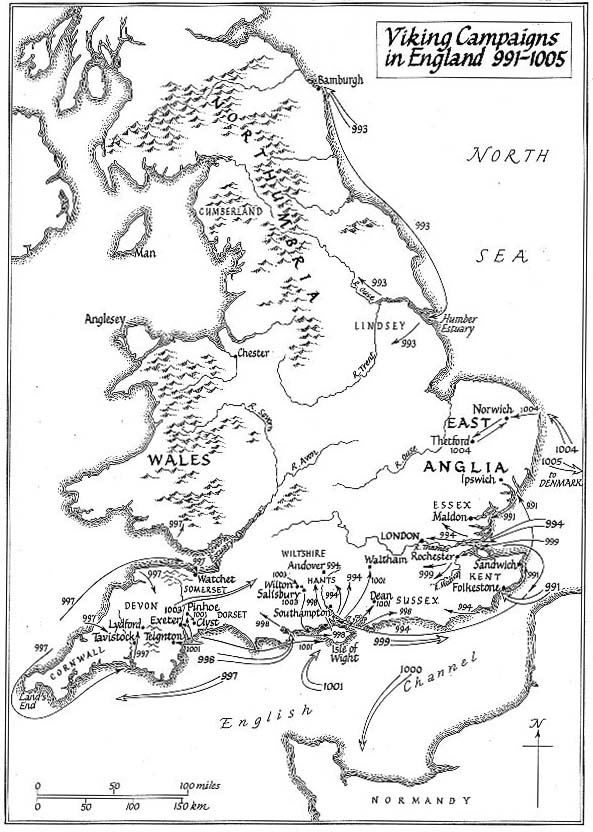
Researching Edmund Ironside, however, drew me into a period of history I did not previously know that much about: the late-10th and early-11th century, in the decades leading up to the arrival of William the Conqueror. Even in my medieval history courses in undergrad, it's something that tends to get skipped over between the fall of the Roman Empire and the rise of the Plantagenets. We get a brief nod to the various invading tribes, a mention of Alfred the Great "unifying" England (though it had an appalling tendency to fall right back apart again), and then we skip merrily on to the Norman Conquest. The Danelaw was something I had seen on maps but never really understood, and the transmission of the crown remained incredibly murky. I had a lot further to go on my own knowledge of the background to this play before I could convey any of it usefully to actors.

Primary sources from this period are few and far between, so I couldn't jump to those as readily as I could for Julius Caesar, and even secondary sources are less easy to get one's hands on. I found I was able to rely on two excellent podcasts: The History of England and Rex Factor (both of which I can highly recommend to any English history enthusiasts). Leaning on their guidance, I was able to sort out this series of events leading up to the events of Edmund Ironside:
  • Edgar the Peaceful of the House of Wessex reigns over the Kingdom of England for sixteen years. He re-conquers the Danelaw, a section of England long held by the Danish, and manages to unite England under Anglo-Saxon rule. 
  • Upon his death, his nobles quarrel over which of his sons, Edward or Aethelred, should succeed. Though Edward was older, he was possibly illegitimate and Aethelred’s mother was perceived as Edgar’s “true wife”. 
  • Edward manages to seize power and is crowned by two archbishops. His reign is marked by famine and “manifold disturbances”. 
  • Edward gets himself murdered in 978, for reasons that are unclear. It is possible that Queen Aelfthryth, Aethelred’s mother, helped in the plot. 
  • Younger brother Aethelred takes over, possibly only about 12 years old at the time. 
  • In 980, Danish raiders start raiding the English coast. 
  • Over the next decade, they win more territory and crush the English armies at the Battle of Maldon in 991. Aethelred then begins paying Denmark tribute. 
  • Aethelred marries Aelgifu, daughter of the Earl of Northumbria. They have ten children; the most important son will be Edmund, later called Ironside, third-born. 
  • Peace lasts for a few years, but in 997, the raiding starts up again, and in 1001, a large Danish fleet lands in southeastern England.
  • In 1002, Aethelred orders a massacre of all Danes in England – despite not having control of nearly a third of the country at that time. The King of Denmark at this time was Sweyn Forkbeard, and his sister was killed during the massacre, prompting his full-scale invasion of England. 
  • Aethelred marries Emma of Normandy (linking the English throne for the first time to the Dukes of Normandy). They have three children: Edward, Aelfred, and Goda. 
  • Over the next several years, the Danes re-establish the Danelaw, and in 1013, they overwhelm the English entirely, forcing Aethelred into exile in Normandy. 
  • Sweyn dies suddenly in 1014. 
  • Danish lords immediately swear allegiance to his son Canute (though only in England; his older brother Harald became King of Denmark), but the English noblemen begin work to restore Aethelred. 
  • Aethelred launches a counter-offensive against Canute and his allies, and within two months of his father’s death, Canute withdraws from England to avoid open war. 
  • In 1015, Aethelred’s son Edmund Ironside rebels against his father and sets himself up in control of the former Danelaw – where the people had come to hate both Aethelred and Canute equally. 
  • Canute goes on to conquer most of the rest of England. 
  • Edmund rejoins his father to defend London shortly before Aethelred dies in 1016. 
  • Edmund and Canute declare open war.

Not to spoil something that happened nearly a thousand years ago, but Canute eventually prevails. Twenty years later, however, control of the English crown ended up reverting back to the Saxon descendants of old Aethelred, simply because they ran out of qualified Danes. The dynastic victory was short-lived, however; Edward the Confessor (an overly pious and weak-willed king who would set the form for Richard II and Henry VI) did not have issue of his own and failed to specify an heir. The Saxon Earls of Wessex seized control based off of an ambiguous gesture the dying king may or may not have made, supposedly indicating Harold Godwinson as his heir. Edward had feared that family's power, however, and had not liked Earl Godwin personally, and so had spent much time cultivating relationships in Normandy, where he had grown up in exile. Duke William felt sure that Edward had intended the crown for him -- and thus began the invasion which marks the start of English history as most of us know it.

At the heart of all of this is a succession problem -- something that plagued the English time and again. We tend to look back at history through a filter, and what several centuries of more-or-less unchallenged succession have taught us is that the oldest son of the king gets to be king when Dad dies -- and if there's no son, then it's the oldest daughter. Simple and straightforward. But this wasn't always the case, and the English had to spend a few hundred years sorting out how their succession would work. The Germanic tradition, which caught on in much of Europe following the collapse of the Roman Empire, was to divide property more or less equally between all of one's sons, and to dower daughters accordingly, so that they would take property with them to their husbands. This splitting, recombining, and sub-splitting of property is how the Holy Roman Empire ended up its hundreds of kingdoms and fiefdoms, and how the prolific French kings were frequently ending up with more Ducs-royales than they knew what to do with.

In English succession, well into the 15th century, might tended to make right. The tradition capped off by Henry Tudor had its roots here, centuries earlier. English law's ambiguity on this matter had led to trouble again and again: Aethelred and Edward the Confessor created similar problems to those of Henry I (when his male heir died unexpectedly and he tried to leave the kingdom to his daughter Matilda, his nobles rebelled and chose his nephew Stephen instead, leading to a decades-long civil war), Henry II (you can see his troubles on-stage in The Lion in Winter), Edward III (his male heir died, and no one quite seemed certain if it should pass to his young grandson or to an adult, capable son), Henry V (died young, leaving his 9-month-old son King, with a host of bickering uncles ready to fight for control), and Henry VIII (had trouble conceiving a male heir, had to change the entire course of English religion in order to get one). The cycles repeat themselves in almost alarmingly similar patterns.

As Elizabeth Tudor entered her dotage with no direct heir-apparent, the future of England was again uncertain, as it had been so many times in the past. The English populace was restless, and not without cause, particularly for those who knew their history. During this period, a spate of plays crop up dealing with previous iterations of the succession crisis, perhaps reflective of London's mood towards the end of the 1590s. Edmund Ironside fits in nicely to the set, focusing not only on the importance of designating a clear heir, but with the added bonus of using patriotic themes to emphasize the need to pick one without too many troublesome continental entanglements. It's interesting to me to be looking at these plays and these historical cycles now as an American. We may not have issues of primogeniture or hereditary succession to worry about, but we're definitely currently concerned with the succession of control of our government.

This Sunday, October the 28th, you can see two succession-oriented plays on stage at the Blackfriars Playhouse: come for the 2pm matinee of King John and stay for the 7:30pm Staged Reading of Edmund Ironside. The Staged Reading is Pay-What-You-Will and open to the public, so we hope to see you there!

21 March 2012

Book Review: 'Contested Will: Who Wrote Shakespeare?' by James Shapiro

One of the greatest challenges for a modern historian is to remove the filter of Romanticism and Victoriana when we look backwards through time. Modern society has inherited a lot of inaccurate notions about the pre-Industrial world from our more immediate forebears, creating an assumption that the medieval and early modern worlds shared the same values, the same culture, the same societal structures, the same goals as the Victorian world – an assumption that is, in many ways, far off the mark. To achieve greater understanding of anything early modern, a historian – professional or recreational – must first clear her eyes of the haze which the nineteenth century imposed on them.

Lifting this veil is, to my reading of it, the major triumph of James Shapiro's Contested Will: Who Wrote Shakespeare?. Both history and historiography, this book examines the case both for and against Shakespeare as the author of the works attributed to his name – and comes down, quite definitively, on the side of Shakespeare. Shapiro notes, in the opening pages of the book, his interest, which lies "not in what people think – which has been stated again and again in unambiguous terms – so much as why thy think it. No doubt my attitude derives from living in a world in which truth is too often seen as relative and in which mainstream media are committed to showing both sides of every story." Noting the prevalence of opposing viewpoints in modern society – such as those on creationism vs evolution, whether or not man walked on the moon, and "more disturbingly," those who deny the Holocaust deniers – Shapiro states, "I don't believe that truth is relative or that there are always two sides to every story. At the same time, I don't want to draw a naïve comparison between the Shakespeare controversy and any of these other issues. I think it's a mistake to do so, except insofar as it too turns on underlying assumptions and notions of evidence that cannot be reconciled. Yet unlike some of these other controversies, I think it's possible to get at why people have come to believe what they believe about Shakespeare's authorship, and it is partly in the hope of doing so that I have written this book."

Shapiro begins with the first attempts, in the eighteenth century, to expand knowledge of Shakespeare's life and works, with George Steevens and Edmund Malone arguing their various perspectives. This idea of construction, of needing to find reasons in Shakespeare's life for the events and viewpoints in his plays, led to a somewhat desperate search on the parts of Samuel Ireland and his son, William-Henry, for new evidence about Shakespeare's life. Unfortunately, these gentlemen came to the idea several decades too late; any evidence not already preserved was long gone. William-Henry, motivated in Shapiro's depiction as somewhat pathetically frantic to bolster his father's deflated confidence, embarked on an orgy of forgery, creating numerous documents in "Shakespeare's hand": deeds, letters, inscriptions, even entire plays. Briefly celebrated, then proved false under William-Henry's own confession of fraud, these documents nonetheless opened the door to the search for biography in Shakespeare's plays. Even Malone, who vigorously attacked the Irelands for the fraud, still entertained:
the presumption that Shakespeare could only write about what he had felt or done rather than heard about, read about, borrowed from other writers, or imagined. The floodgates were now open and others would soon urge, based on their own slanted reading of the plays, that Shakespeare must have been a mariner, a soldier, a courtier a countess, and so on. By assuming that Shakespeare had to have experienced something to write about it with such accuracy and force, Malone also, unwittingly, allowed for the opposite to be true: expertise in the self-revealing works that the scant biographical record couldn't support – his knowledge of falconry, for example, or of seamanship, foreign lands, or the ways that the ruling class behaved – should disqualify Shakespeare as the author of the plays.
Delia Bacon, c. 1853Shapiro also positions these early days of the search for authorship evidence in light of the early attribution studies for the Bible and the works of Homer; for the first time, literary monoliths were subject to question and interrogation. Shapiro then moves through the first seeds of the anti-Stratfordian argument to its full-blown manifestations in the propositions of first Francis Bacon and then Edward de Vere, Earl of Oxford, as alternate candidates. The Baconian theory, for instance, began with Delia Bacon (no relation) in the mid-19th century. Shapiro explains how Delia's ideas about Francis Bacon connected to the notion of a grand conspiracy, focused on the polymath English courtier as the center of a radical proto-republican political movement. The evidence for these claims, she determined, was present in a close reading of the plays as biographical in nature. Shapiro demonstrates how the logic of such an association is inherently flawed, thanks to the limited scope both of Delia's historical awareness and of the plays which she examined:
The framework within which [Delia Bacon] imagined the world of the English Renaissance, also typical of her day, was limited to monarchs, courtiers, and writers. The rest were written off as ignorant masses. […] It was history from the top down and limited geographically to London and the court. Her Shakespeare canon was no less restricted and also typical of nineteenth-century readers: at the center of it were Hamlet and The Tempest, and it extended to the plays meatiest in philosophical and political content – Othello, Julius Caesar, Lear, Romeo and Juliet, Richard the Second, and, unusually, Coriolanus – but not much further. While she had surely read the other thirty or so plays, as well as the poetry, they didn't serve her purpose, and for the most part she passed over them in silence.
Delia Bacon published, to moderate success, though most people who supported her initially came to regret it, because of the mental instability she developed following a very public jilting. Shortly after the release of her book, she was institutionalized, and spent the last two years of her life in an asylum. Despite this tragic end, her ideas caught fire in the decades following her death, earning the attention, if not always the outright endorsement, of celebrities including Ralph Waldo Emerson, Mark Twain, Helen Keller, and Henry James. Delia Bacon also introduced the notion of a secret cipher embedded in the texts of the plays, an idea picked up and popularized by Ignatius Donnelley – and an idea risible under even the lightest scrutiny for several reasons, not least of which is that a tweak of the cipher could yield any result the seeker wanted, but also because, as Shapiro points out, "Donnelly didn't have a clue about how compositors worked in Elizabethan printing houses, where such a scheme would have been unimaginable and the layout he describes impossible to reproduce."

By the 1920s, however, Shapiro points out that "Philosophy and politics were out, Oedipal desires and mourning for dead fathers in," giving rise to the new Oxfordian theory. Psychoanalysis imagined a link between the writer of Hamlet and the character of Hamlet, based on repressed sexual urges and dysfunctional family relationships. Sigmund Freud questioned Shakespeare's identity but did not embrace Bacon as the alternative; John Thomas Looney (pronounced "loany", despite temptations to the contrary) picked up the psychoanalytic thread and proposed Edward de Vere, the Earl of Oxford. Shakespeare's life did not mirror the required narrative; the Earl of Oxford's could, especially if you layered on other theories about de Vere being Queen Elizabeth's lover and/or son. From a secret political group under Bacon's direction, the anti-Shakespearean case now rested on a more lurid narrative: a conspiracy tinged with sexual misconduct, succession anxiety, and disrupted inheritance.

For decades, the Oxfordians plagued themselves with divisive conclusions about this reading, however: nobody knew about the conspiracy; everyone knew and didn't think it worth mentioning; everyone knew but was kept silent by Queen Elizabeth's totalitarian state; a select group knew and kept it quiet to protect the Queen; and so on. Never mind that Oxford died in 1604, before many of Shakespeare's plays were written; in the scope of such an all-encompassing conspiracy, Oxfordians find that small matter to explain away. They were written earlier, and released after his death, as a way of perpetuating the myth of William Shakespeare as the front man. Shapiro details how, in more recent years, the Oxfordian theory has gained traction due to the public's increasing fascination with conspiracy theories of all sorts. From moon landings to who shot JFK to the vast circulation of conceptions about secret government involvement in nearly every act of tragedy or terrorism of the past three decades, modern culture has propagated a pervasive suspicion of authority. "In such a climate," Shapiro says, "a minor act of conspiratorial suppression on the part of Tudor authorities made perfect sense."

Overall, the impression this book leaves a reader with is that the anti-Shakespearean case is one stuffed with tragic figures and ulterior motives. Its very earliest characters are among the saddest: poor William-Henry Ireland, desperately seeking a father's approval, and jilted Delia Bacon, who clung to her theories as a way of reclaiming agency over her life, but with a paranoid mania that drove her to madness and death. These are the figures often left out of the Baconian and Oxfordian narratives; they prefer, naturally, to tout the support of such grand figures as Mark Twain and Sigmund Freud. As Shapiro demonstrates, however, the rationale of the great figures is not untainted, either. They all require vast constructs, additions and suppositions to the historical record. Freud's support of the Oxfordian case is deeply tied to his own theories about Oedipal desire; he had to read Hamlet in terms of Oxford's own familial-sexual-philosophical entanglements, because to suppose that the story came from any other origin was a strike against the psychological theories on which he made his living and his fame.

Mark Twain's book questioning Shakespeare's identityIt's Twain's rationale, and Shapiro's dissection thereof, that I find most interesting and most telling. Twain echoes Malone in supposing it impossible for a writer to draw from anything but experience; "For Twain, the notion that great writing had to be drawn from life – rather than from what an author heard, read, or simply imagined – was an article of faith, at the heart of his conception of how serious writers worked." It is, in many ways, a very strange idea, taking imagination so entirely out of the equation, but it was a product of its time; in the 19th and early 20th centuries, more and more writers were publishing memoirs, and biography was a popular genre. The close association between fiction and experience was deeply embedded in the culture, providing fertile ground in which the anti-Shakespearean attitudes could take root. This is one of the more difficult veils to penetrate when looking back at the early modern period through modern eyes – the idea that the early modern writers simply did not view their craft in the same way that the Victorian tradition has convinced us all writers must.

Shapiro asserts that this legacy lives on in writing today, that modern readers retain assumptions that "novels necessarily reveal something about a writer's life." I would argue that this is more true in so-called "literary" fiction than it is of genre fiction. Readers of science fiction and fantasy novels (or viewers of those movies) -- and to an extent, of mysteries, thrillers, and romances as well -- have no more expectation of a creator's personal experience with the subject matter than Shakespeare's original audiences had. We need no more assume that Shakespeare had first-hand knowledge of Italy than that George Lucas had of Tatooine, J. R. R. Tolkien of Middle-Earth, or J. K. Rowling of Hogwarts. While "serious" fiction often retains a more autobiographical bent, I think it is in genre fiction that writers operate more like Shakespeare did: indulging freely in the realm of imagination, drawing off of previous stories, history and mythology, and timeless tropes for their inspiration. There you find writers more interested in telling a good story than in talking about themselves – which is not to say that glimpses of a writer's viewpoint won't peep through from time to time, but they don't dominate in the way that post-Romantic assumptions would indicate. (It is in many ways ironic that the very people who disdain the use of imagination in writing are so wonderfully and copiously imaginative themselves, at least when it comes to creating the fantasy narratives necessarily to support alternate authorship candidates).

The final chapter of the book is a tour de force in defense of Shakespeare – though Shapiro acknowledges the absurdity that Shakespeareans should even be on the defensive, that the burden of proof has somehow shifted to us to prove there is no conspiracy, rather than on the Oxfordians to prove that there is. After entertaining the anti-Stratfordians and exposing their flaws, Shapiro comes down unquestionably (and refreshingly unapologetically) on the side of Shakespeare of Stratford:
When asked how I can be so confident that Shakespeare was [the plays'] author, I point to several kinds of evidence. The first is what early printed texts reveal; the second, what writers who knew Shakespeare said about him. Either of these, to my mind, suffices to confirm his authorship – and the stories they tell corroborate each other. All this is reinforced by additional evidence from the closing years of his career, when he began writing for a new kind of playhouse, in a different style, in active collaboration with other writers.
Shapiro then defends Shakespeare with a barrage of real, concrete evidence – text-based evidence including examples of speech prefixes, the process of printing plays, the relationship of typesetting to the variant spellings of Shakespeare's name, his demonstrated familiarity with actors, and so forth. The proof of such deep association with the playing companies, the theatre building, and the workings of the shareholders effectively eradicates any validity to the presumption that the plays could have been written by someone who did not inhabit that world.

Shapiro also engages with the testimonies of so many of Shakespeare's contemporaries, identifying the man from Stratford as the man who wrote the plays: George Buc, Master of the Revels; Robert Greene, vitriolic pamphleteer; Francis Meers, whose Palladis Tamia lists all of Shakespeare's plays which had been acted by 1598; Gabriel Harvey, poetry critic; William Camden, historian; playwrights John Webster, Francis Beaumont, and Thomas Heywood -- the list goes on and on, but the trump card is fellow playwright, rival, and friend, Ben Jonson, who "left the most personal and extensive tributes to Shakespeare. For many, his testimony alone resolves any doubts about Shakespeare's authorship of the plays." Consider me one of them. Even if we did not have the voluminous other evidence that we do have, Jonson alone would convince me. He comments both so prolifically and so personally on Shakespeare's writing that I find it a violation of Occam's Razor to imagine that he was either ignorant or part of a vast conspiracy – and knowing what I know about Jonson, I really can't believe he could have kept a secret of that magnitude. From Ben Jonson's epitaph to Shakespeare, in the preface of the 1623 First Folio

Finally, Shapiro draws a connection between Shakespeare's plays and the playing spaces he wrote for, discussing how the space affected what kind of story Shakespeare could tell and how he could tell it, particularly thanks to a distinct change towards the end of his career:
We have also had drummed into us that he was Shakespeare of the Globe – though that playhouse was built only in the closing years of Elizabeth's reign. Long forgotten are the other playing spaces in and around London in which he had built his reputation over the previous decade: the Theatre, the Curtain, Newington Butts, the Rose, Richmond, Whitehall, perhaps a brief stint at the Swan. … But had you asked anyone on the streets of London in the winter of 1610 where you could go to see Shakespeare's latest play, there would have been only one answer: 'Blackfriars.' The Blackfriars Theatre means little today to most admirers of Shakespeare; so far as I know, only a single replica of it has ever been erected, in rural Virginia, which attracts both spectators and scholars. The story of the Blackfriars Theatre is also the story of the Jacobean Shakespeare, and of the particular challenges he faced toward the end of his playwriting career. And that, in turn, helps explain why only Shakespeare could have written his late plays that were staged there.
Shapiro's recognition is apt and accurate, and that close relationship between writer and playing space is one we frequently refer to in our educational materials and workshops. A different kind of theatre demanded a different kind of plays, and Shakespeare's latest works reflect that shift, making a reconstruction of the plays' timeline to fit a 1604 death date absurd. I hope this spatial connection becomes a stronger part of the narrative of the "controversy" – perhaps it will help the Blackfriars Theatre and its descendent, our Blackfriars Playhouse in Staunton, earn greater recognition as one of Shakespeare's prominent theatrical homes.

The final chapter of Contested Will ought to hammer home, once and for all, that Shakespeare was Shakespeare, setting the matter entirely to rest. Except, as Shapiro ably points out, there is no arguing with a conspiracy theorist. Any evidence just gets twisted to support the idea of a vast cover-up. Nonetheless, Shapiro's book is a veritable armory of weapons, both offensive and defensive, for the Shakespearean set. What's more, he delivers all of his information with felicity and wit; the book is a wonderful read as well as an intellectual triumph. I highly recommend it to anyone with a dog in this fight, as it were, but also to anyone who is simply interested in writing and in how ideas about it have evolved over time. Shapiro provides us not only with a rousing defense of Shakespeare, but also a valuable peek through the veils of time, rolling back our assumptions and laying bare the reality, insofar as it is knowable.

If you're interested in further thoughts on this topic, please join the ASC on March 31st at 10:30am at the Blackfriars Playhouse. Dr. Ralph Alan Cohen will be delivering a lecture featuring his own dissection of the authorship matter, entitled "Knock, Knock: Who Wrote Shakespeare?"

15 March 2012

"Let each man render me his bloody hand": Blood on the Ides

On the Ides of March last year, I explored the rhetoric of what is possibly my favorite speech in all of Shakespeare: Antony's funeral eulogy for Caesar, in which he whips the plebeians into a murderous frenzy. As I was last year, I remain a little in awe of the strange cultural phenomenon surrounding this day. Quotes from Plutarch and Shakespeare are everywhere -- and I wonder how many people are consciously aware of whom they're quoting, or if those phrases have so permeated our world that they've detached entirely from their original context.

I make my living now with my head in the early modern era, but I've always kept one foot trailing in the classics, particularly in this fascinating period where the Republic crashed and metamorphosed into the Empire. Fortunately, Shakespeare gives me fertile territory on which to indulge both of my historical obsessions. And I'm not alone -- those of us in the Shakespeare world seize on the opportunity that this cultural awareness provides (carpe occasionem?). Twitter is full of our enthusiasm today, and a video on Pursued by a Bear explores the play's place in the common consciousness as well as providing an interesting analysis the dearth of really good productions of the show.


This year, I thought I'd take a look at a particularly interesting staging moment which precedes the great speech I explored last year: when Antony greets the conspirators just after Caesar's murder. Two of the most visually striking moments in Julius Caesar are Caesar's assassination and the subsequent decision of the conspirators to wash their hands in the corpse's blood. This scene can pack quite a bit of power -- especially in a theatre like the Blackfriars Playhouse, where the actors share light with the audience -- but it also lends itself to quite a bit of mess. Blood is something that actors and production companies have to negotiate with, deciding how much to use, what kind to use, where to hide blood packets, whether or not it can get on clothing (and if so, how to get it out; if not, how to keep that from happening). Often, productions choose to stylize the blood in this scene, for those very practical reasons. I will always champion the use of live blood, however, because of what happens later in the scene.
CASSIUS
Where is Antony?

TREBONIUS
Fled to his house amaz'd:
Men, wives, and children stare, cry out, and run,
As it were doomsday.

BRUTUS
Fates, we will know your pleasures:
That we shall die, we know; 'tis but the time
And drawing days out, that men stand upon.

CASSIUS
Why, he that cuts off twenty years of life,
Cuts off so many years of fearing death.

BRUTUS
Grant that, and then is death a benefit:
So are we Caesar's friends, that have abridged
His time of fearing death. Stoop, Romans, stoop,
And let us bathe our hands in Caesar's blood
Up to the elbows, and besmear our swords:
Then walk we forth, even to the marketplace,
And, waving our red weapons o'er our heads,
Let's all cry 'Peace, freedom and liberty.'

CASSIUS
Stoop, then, and wash. How many ages hence
Shall this our lofty scene be acted over
In states unborn and accents yet unknown?

BRUTUS
How many times shall Caesar bleed in sport,
That now on Pompey's basis lies along,
No worthier than the dust?

CASSIUS
So oft as that shall be,
So often shall the knot of us be call'd
The men that gave their country liberty.
First of all, this is weird. There is just no getting around that this is a really strange thing to do with someone you've just killed. This is not a bit of a historical culture, not something Romans just did when they killed someone. To me, it reads as Brutus coming a little unhinged. Then, think about how deep you would have to plunge your hands into a dagger wound -- likely a puncture far more than a rending gash -- to get up to the elbow in blood. It's pretty gruesome, and I think that the more real and visceral the blood appears, the more the audience is going to feel the grotesque aspect of the scene, rather than dismissing it as, "Oh, a thing people just did back then." Live blood also gives the other actors a lot to work with -- physically as well as figuratively -- in terms of how much they are on board with Brutus or not. If at least a couple of the conspirators are visibly uncomfortable with smearing themselves up to the elbow in blood, that also transmits some important information to the audience.

Secondly, it's ambiguous whether or not Trebonius washes his hands in blood along with the rest of the conspirators. He's on stage at this point, but as someone who did not actually take part in the stabbing, I think there's justification for not having him join in the literal bloodbath. You could certainly choose to have him wash in blood at this point, but I think there's more money in having him hold back, because of what happens when Antony -- whom Trebonius detained outside the Senate, whom he kept from coming to Caesar's aid -- enters.
Enter ANTONY

BRUTUS
But here comes Antony:
Welcome, Mark Antony.

ANTONY
O mighty Caesar! Dost thou lie so low?
Are all thy conquests, glories, triumphs, spoils,
Shrunk to this little measure? Fare thee well.
I know not, gentlemen, what you intend,
Who else must be let blood, who else is rank:
If I myself, there is no hour so fit
As Caesar's death hour, nor no instrument
Of half that worth as those your swords, made rich
With the most noble blood of all this world.
I do beseech ye, if you bear me hard,
Now, whilst your purpled hands do reek and smoke,
Fulfil your pleasure. Live a thousand years,
I shall not find myself so apt to die:
No place will please me so, no mean of death,
As here by Caesar, and by you cut off,
The choice and master spirits of this age.

BRUTUS
O Antony! Beg not your death of us.
Though now we must appear bloody and cruel,
As by our hands, and this our present act
You see we do: yet see you but our hands
And this the bleeding business they have done:
Our hearts you see not; they are pitiful:
And pity to the general wrong of Rome,
As fire drives out fire, so pity, pity
Hath done this deed on Caesar. For your part,
To you our swords have leaden points, Mark Antony:
Our arms in strength of malice, and our hearts
Of brothers' temper, do receive you in,
With all kind love, good thoughts, and reverence.

CASSIUS
Your voice shall be as strong as any man's
In the disposing of new dignities.

BRUTUS
Only be patient till we have appeased
The multitude, beside themselves with fear,
And then, we will deliver you the cause,
Why I, that did love Caesar when I struck him,
Have thus proceeded.

ANTONY
I doubt not of your wisdom:
Let each man render me his bloody hand:
First, Marcus Brutus, will I shake with you;
Next, Caius Cassius, do I take your hand;
Now Decius Brutus, yours: now yours, Metellus;
Yours, Cinna; and my valiant Casca, yours;
Though last, not least in love, yours, good Trebonius.
Gentlemen all: Alas, what shall I say?
Antony comes in and shakes each man's bloody hand, one by one, and as he names them, it's hard to feel that he's doing anything other than marking them down for retribution. And then, at last, he comes to Trebonius, who did not stab Caesar himself, but who was nonetheless instrumental to the plot, the means by which Antony was not there to defend his friend. So if Antony has just shaken six other bloody hands, his own would be quite smeared with blood by this point -- which he then transfers to Trebonius. If his hands have been clean till that point, Antony's gesture makes a powerful statement: Trebonius is, in his eyes, every bit as guilty, every bit as culpable, and Antony is every bit as determined to take him down. So, while you could have Trebonius engage in the blood-smearing earlier on, I think you get greater payoff from saving it for this moment.

An exploration of this and other staging challenges in Julius Caesar can be found in our Study Guide -- and the play will be part of the 2013 Actors' Renaissance Season. I'm going to be serving as dramaturg for that production, so I'm sure next March 15th, I'll have something new to share. Until then, cavite idus Martii, everyone!

21 February 2012

"The pancake bell rings, the pancake bell! Tri-lil, my hearts!": Shrove Tuesday in Early Modern England

Nowadays in America, we know today -- the day before Ash Wednesday, 41 days before Easter -- as Mardi Gras, a festival of extravagance and delight, with traditions passed down to us from the French and Italians. From the bayou to Rio, the Carnival season ends in a triumphant celebration of life and laughter, with parades, parties, fantastic costumes, throwing of beads, and yes, some degree of inebriation.

But for Shakespeare and his contemporaries in late-16th century England, this day was something different: Shrove Tuesday. And on Shrove Tuesday, you ate pancakes. Why pancakes? Because they involved many of the rich foodstuffs -- sugar, fat, flour and eggs -- whose consumption was restricted during Lent (which Anglicans still observed, despite the break with the Catholic Church). It was also a day to gorge yourself on meat and drink, to clear the larders of all those things you couldn't eat during Lent and couldn't afford to let spoil in the meantime.

This tradition is the subject of several scenes in Thomas Dekker's The Shoemaker's Holiday, where the apprentices of the City of London look forward to a great feast:
Firk: I'll lead you to victuals, my brave soldiers. Follow your captain. Oh, brave! (Bell rings). Hark, hark!

All:
The pancake bell rings, the pancake bell! Tri-lill, my hearts!

Firk:
Oh brave! O sweet bell! O delicate pancakes! Open the doors, my hearts, and shut up the windows. Keep in the house, let out the pancakes. Oh, rare, my hearts! Let's march together for the honor of Saint Hugh to the great new hall in Gracious Street Corner, which our master the new Lord Mayor hath built.

Ralph:
Oh, the crew of good fellows that will dine at my Lord Mayor's cost today!

Hodge:
By the lord, my Lord Mayor is a most brave man. How shall prentices be bound to pray for him and the honor of the Gentlemen Shoemakers! Let's feed and be fat with my lord's bounty.

Firk:
Oh, musical bell still! Oh Hodge, o my brethren! There's cheer for the heavens: venison pasties walk up and down piping hot like sergeants, beef and brewis comes marching in dry fats, fritters and pancakes comes trolling in in wheelbarrows, lemons and oranges hopping in porters' baskets, collops and eggs in scuttles, and tarts and custards comes quavering in in malt shovels.

Enter more prentices.


All:
Whoop! Look here, look here!

Hodge:
How now, mad lads, whither away so fast?

First Prentice:
Whither? Why, to the new great hall. Know you not why? The Lord Mayor hath bidden all the prentices in London to breakfast this morning.

All:
O brave shoemaker! O brave lord of incomprehensible good fellowship! Hoo, hark you, the pancake bell rings.

Cast up caps.


Firk:
Nay, more, my hearts: every Shrove Tuesday is our year of jubilee, and when the pancake bell rings, we are as free as my Lord Mayor; we may shut up our shops and make holiday. I'll have it called Saint Hugh's holiday.

All:
Agreed, agreed! Saint Hugh's holiday!

Hodge:
And this shall continue forever.

All:
Oh brave! Come, come, my hearts! Away, away!

Firk:
Oh, eternal credit to us of the Gentle Craft! March fair, my hearts. Oh, rare!
As someone who has had the "oh, rare!" honor to play Firk in a production of The Shoemaker's Holiday (directed by Casey Caldwell back in 2010, as part of his MFA), I can verify that this scene only works if you embrace its jubilant madness entirely -- much in the spirit of Shrove Tuesday or its modern descendents. You have to let the good times roll over you and indulge thoroughly in the exuberance -- and there's something marvelously freeing about giving yourself over to that on stage.

But, as a scholar, I enjoy what this scene tells us about the historical celebrations: Firk gives a detailed menu, listing what the prentices can look forward to at their feast; the ringing of the bell to announce the holiday has historical precedence; and the freedom to "shut up shop" for the afternoon is likewise chronicled elsewhere. Dekker thus provides social historians with a glimpse into Shrove Tuesday's place in the religious and celebratory calendar of early modern England. The tradition lives on -- pancakes are still a typical Shrove Tuesday meal in many Anglican and Lutheran communities, and several cities in England still hold pancake races on the holiday.

So -- Who's up for some pancakes?

10 February 2012

Exploration and Revelation: The Winter 2012 Teacher Seminar

This past weekend, we held our Winter Teacher Seminar, a two-day event where participants attend workshops and lectures and see two of the plays of the Actors' Renaissance Season. Thanks in part to a generous grant from the Richard and Caroline T. Gwathmey Memorial Trust, more educators than ever were able to join us – and we had a group from diverse teaching backgrounds: middle schools, high schools, and universities, public and private, military and religious, as well as some professional acting companies and arts organizations. We also had participants join us from as far away as Florida and Pennsylvania, as well as representing 16 cities and counties within Virginia. It was so exciting to have such a full, enthusiastic group with us for the weekend. I always feel so energized after these events, so full of joy for the work that we do together and for the new avenues of insight these educators feed back to me.

Saturday's workshops focused on Much Ado about Nothing, Sunday's on Richard III. Ralph drew connections between the two plays, and how each has its moments of invited and inappropriate laughter, and each its moments inviting or castigating silence. He drew a correlation between these moments on stage and in the classroom – after all, there are times teachers desperately hope that their students laugh at a joke, and there are times teachers abhor hearing laughter. He also encouraged the teachers to find their own personal hook within the play, something that calls to them and energizes them, and to teach those moments. Teaching requires no small part of vulnerability, to lay out the things you care for to what may often seem an unruly mob of the disaffected and cynical.

Saturday morning, we also modeled one of the activities out of the Much Ado about Nothing Study Guide. This one was my baby, and I'd been looking forward to working through it with our seminar attendees ever since I wrote it back in November – so I was actually fairly nervous heading in. Like any teacher, I have had, on occasion, something I'm really excited about flop rather pathetically when brought to the table. I always learn something from that experience – how I might need to tweak the activity, toss out elements that aren't working, or graft a new idea on – but failure isn't exactly pleasant to go through, however constructive it may ultimately be. So, heart in my hands, I stepped up to lead this workshop. And it went wonderfully(!).

The exploration is an active one, examining how language can inform character choices in the various sparring matches between Beatrice and Benedick. Participants – with the help of the rest of the class – look for moments when one character repeats the other, builds on a metaphor the other started, or arranges contrast of some kind. What the seminar attendees discovered – as I'd hoped they would – is that while Beatrice and Benedick use the same rhetorical devices with each other in three different scenes, the way they use them creates three very different moods, from the aggressive sparring of 1.1 to the tender hesitation of 4.1 to the playful equilibrium achieved in 5.2. We make these devices visual and kinetic – to appeal to different kinds of learners – by having our Beatrice and Benedick peg nerf balls at each other each time, highlighting the verbal tennis match they engage in. It was great to see at what moments one of them (usually Beatrice) was able to score more points.

I love this activity for how it demonstrates several different advantages of performance-based learning: first, how Shakespeare creates these characters as so right for each other. No one else in the play – even in a play as full of quick wits as Much Ado is – can quite match their verbal dexterity. Second, the activity highlights that "infinite variety" of performance choices Sarah and I are always talking about. The rhetoric gives actors – and students – not an answer, but the grounds on which to make a decision. Our avatar Beatrices and Benedicks were able to offer so many alternatives on even the smallest moment – it really drives home that idea of performance-based learning. Finally, this activity appeals to many different kinds of learners, as it involves verbal, textual, visual, and kinetic elements. Everyone from the class clown to the shiest member of the class has a place in this activity. I think all of those elements came across for our seminar attendees, and I'm so pleased I got to share this workshop with them.

You can view a sample of this workshop in-progress on YouTube:


The Gwathmey grant also allowed us to bring two guest speakers to Staunton, giving our participants the chance to interact with scholars whose research bears a direct emphasis on the plays they saw and their classroom activities. Chelsea Phillips, a veteran of MBC's MLitt/MFA program and now a third-year Ph.D. student at Ohio State University, came down to share thoughts related to her dissertation: the presence of pregnant bodies on stage. This discussion is particularly relevant this year, as Miriam Donald, who plays Beatrice in Much Ado about Nothing and the Duchess of York, among other roles, in Richard III, is visibly pregnant. We wanted to offer teachers – especially those bringing their students to see one of those two productions this year – the benefit of Chelsea's research into the historical precedent of pregnant actresses playing non-pregnant roles, in order to give them a solid grounding on which to base classroom discussion. Chelsea also works on Ohio State’s partnership with the Royal Shakespeare Company implementing the RSC’s Stand Up for Shakespeare program in local schools, making her a valuable resource on Shakespeare in the classroom. On Sunday, Carter Hailey joined us for a lecture-demo on textual variants. Carter has taught Medieval and Renaissance literature, Shakespeare, and textual studies at Washington and Lee University, the College of William and Mary (where yours truly was one of his students), Sweet Briar College, and Georgetown University, and he publishes on matters bibliographical, lexical, and editorial. In addition to discussing the textual histories of Much Ado about Nothing and Richard III, he shared Hailey’s COMET, a portable optical collator of his own design and construction, which provides critical editors with a new way of examining variants between texts. We synthesized Carter's lecture with an exploration of how to use textual variants in the classroom as a way to give students greater ownership of the text, allowing them to realize that there is no One Shakespeare to Rule Them All – rather, that the text as they see it has already passed through the hands of many compositors and editors, and that they may make choices based on this awareness.

So, that was the weekend. As ever, I wished I had more time. There's always so much more to say, more staging moments to discuss, more of Shakespeare's word- and stagecraft to explore. I'm already looking forward to our spring seminar, in April, when we'll be leaping into A Midsummer Night's Dream and The Winter's Tale. I'm also going to be releasing a survey soon, both to our seminar participants and to anyone who's purchased a Study Guide from us, asking for feedback on the information and activities we provide. It's interesting to have to examine what it is I need to know from our teachers – a sort of backwards self-evaluation. I'll be putting their feedback into practice when I start – very soon – building the Study Guides for next year. My first endeavor will be Twelfth Night, as we already have folks booking the touring company asking for it. I love seeing so much advance enthusiasm for the ASC's synthesis of education and performance. I extend my heartfelt thanks to everyone who joined us this past weekend, and I sincerely hope we'll see you all again soon.